Snow Won't Stay Put on Your Roof? Why Metal and Asphalt Shed It So Differently
September 23, 2026
Weak Attachment Methods
Maintenance and Inspection After Installation
Even high-quality gutter systems require routine maintenance to function properly. Leaves, twigs, roofing granules, and debris can block water flow and create overflow problems during storms. Clogged gutters place additional weight on the system and increase the risk of sagging or separation.
Seasonal cleaning helps maintain proper drainage and allows homeowners to identify early signs of wear. Areas surrounded by trees often require more frequent maintenance because debris accumulates faster throughout the year.
Gutter guards may help reduce maintenance needs, but no system completely eliminates the need for inspections. Professional evaluations help ensure hidden issues are identified before they develop into larger structural concerns.
Regular Cleaning Supports Performance
Identifying Early Warning Signs
Routine inspections help detect small problems before major water damage occurs. Common warning signs include peeling paint, rust spots, overflowing water, sagging sections, and moisture stains near exterior walls.
Water marks beneath the gutters often indicate leaks or improper alignment. Pools of water near the foundation after rainfall may suggest downspout discharge issues or insufficient drainage capacity. Addressing these concerns early helps extend gutter lifespan while reducing repair costs.
Homeowners should also inspect attic and basement areas for signs of moisture intrusion linked to drainage failures. Early intervention prevents minor gutter issues from escalating into widespread structural damage.
This is paragraph text. Click it or hit the Manage Text button to change the font, color, size, format, and more. To set up site-wide paragraph and title styles, go to Site Theme.
Frequently Asked Questions
Why do ice dams keep forming in the exact same spot every year?
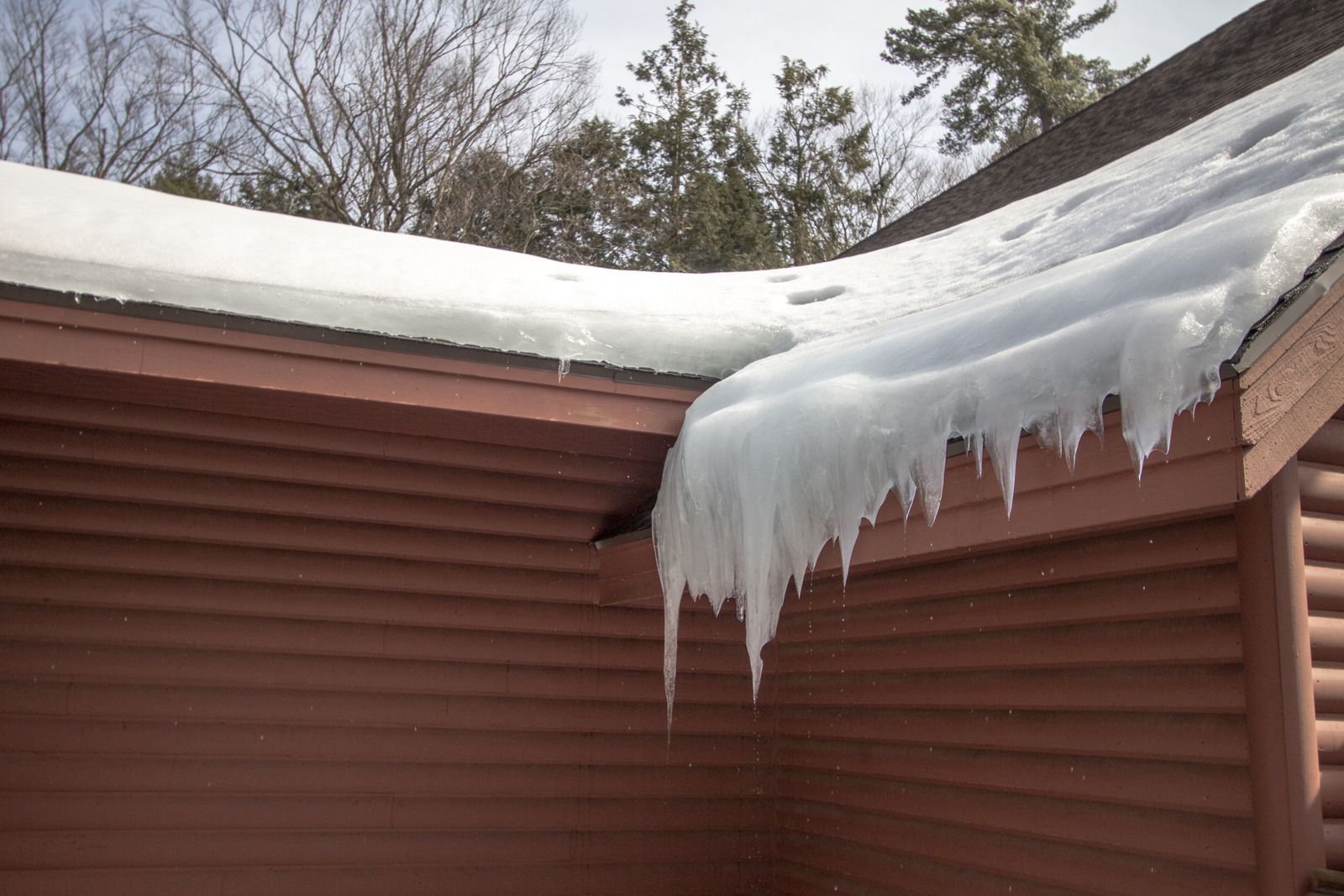
Ice dams return in the same locations because the same heat loss pattern remains. Warm attic areas melt snow above cold eaves, creating repeated freezing points. The location reveals where insulation or air sealing may need improvement.
Are ice dams caused by my gutters or my shingles?
No, gutters and shingles do not create ice dams. They may suffer damage from them, but the cause is uneven roof temperatures from attic heat loss. Proper insulation, ventilation, and air sealing address the actual problem.
Does removing the snow from my roof fix the problem?
Removing snow can temporarily reduce ice dam formation by eliminating water sources. However, it does not correct heat loss or attic issues. Proper air sealing, insulation, and ventilation are needed to prevent recurring winter problems.
Will adding more roof vents get rid of my ice dams?
Adding vents alone will not eliminate ice dams. Effective ventilation requires balanced airflow between soffits and ridge vents. Combined with proper insulation and air sealing, it helps maintain consistent roof temperatures and reduce freezing issues.
Are icicles hanging off my gutters a sign of an ice dam?
Large icicles near gutters can indicate melting snow refreezing at cold roof edges. While not always proof of damage, they often signal heat escaping through the attic and uneven roof temperatures that contribute to ice dams.
Why does my house get ice dams when my neighbor's doesn't?
Ice dams depend on attic conditions, not just weather. Differences in insulation, ventilation, and air sealing affect heat loss. A warmer attic melts snow faster, while a properly insulated home maintains colder roof surfaces and avoids dams.
Quick Answer: Metal roofing sheds snow almost as soon as it lands because the panel surface offers very little grip — snow can slide off a metal roof at pitches as low as 1/12. Asphalt shingles do the opposite. Their rougher, granule-covered surface holds snow in place, and most asphalt roofs need a slope closer to 7/12 or steeper before snow slides on its own. That single difference changes almost everything else: metal sheds fast enough that meltwater rarely sits long enough to refreeze into ice dams, while asphalt's slower melt cycle can send water back under the shingles at the eaves. It also means a metal roof usually needs snow guards or a retention system, since several hundred pounds of packed snow can let go in one sheet without warning. Neither roof type is simply the safer choice. The right answer depends on your roof's pitch, how it's oriented to sun and wind, and what sits below the eaves.
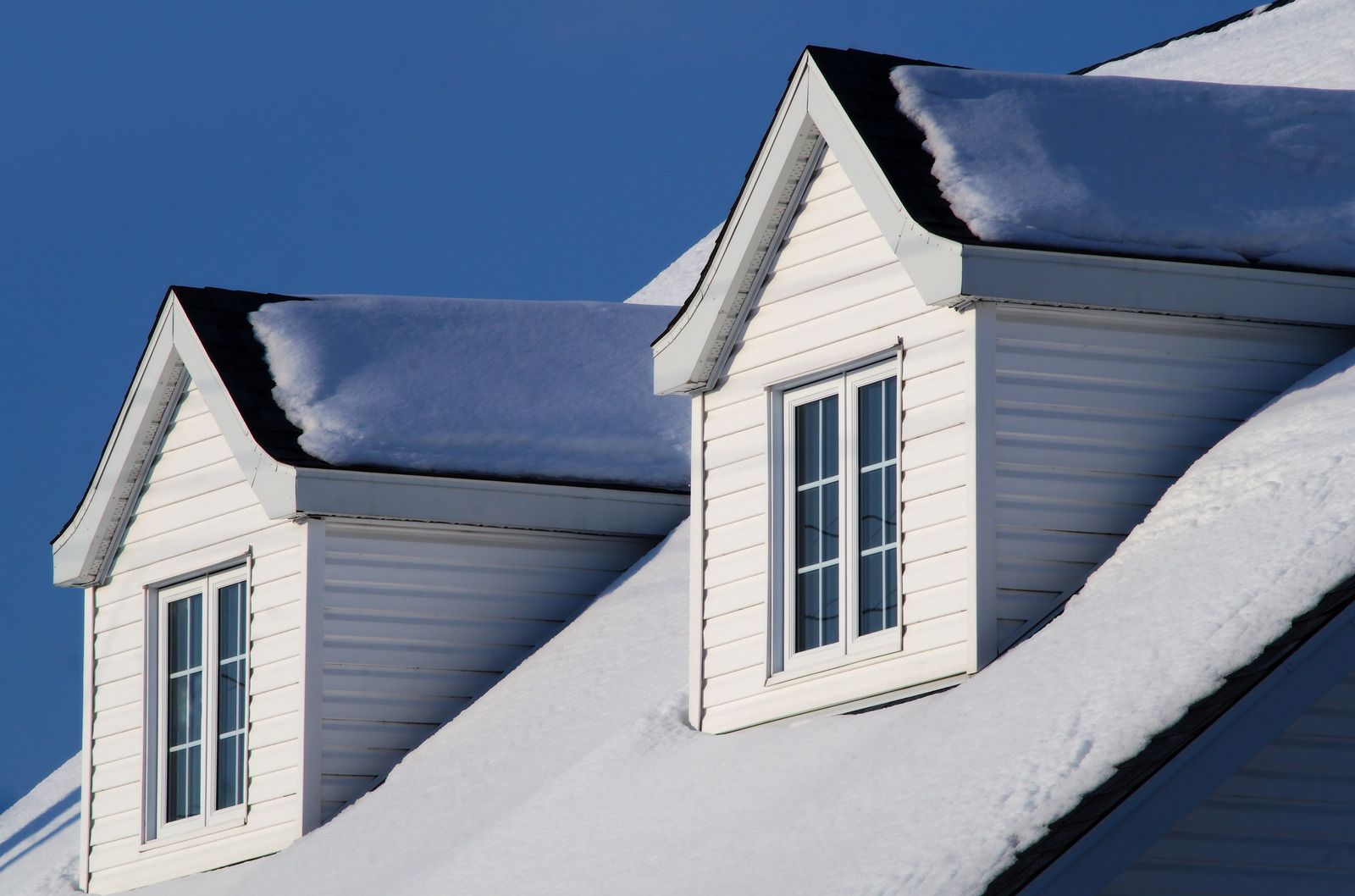
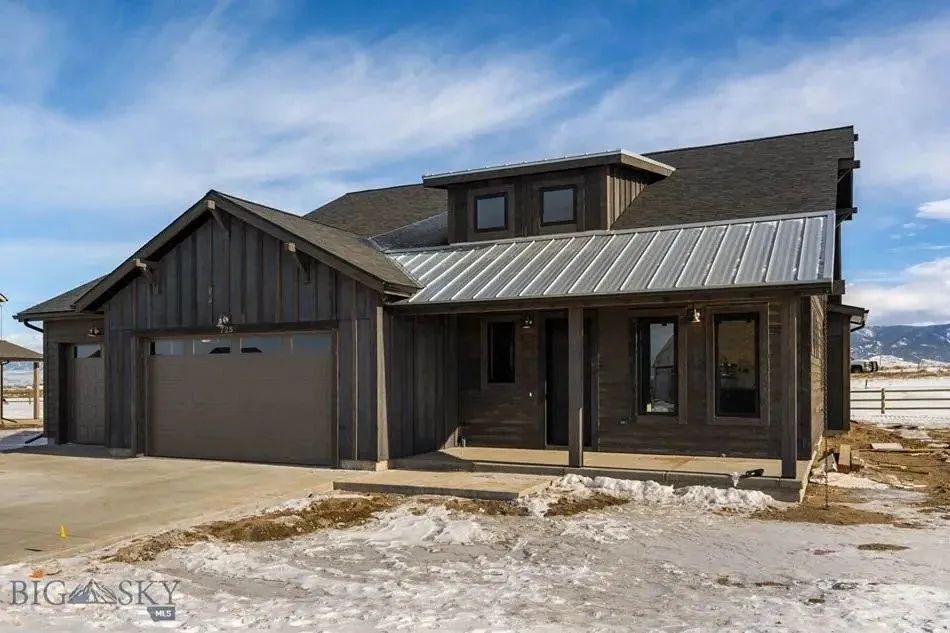
The first real snow of the season lands on a Tuesday night, and by Wednesday morning your neighbor's standing seam roof is bare metal again, glinting in the sun. Yours, three houses down under a dimensional asphalt shingle, is still carrying six or eight inches of white along the north slope. Neither roof is failing. Both are doing exactly what their surface tells them to do, and if you've lived in the Gallatin Valley or up around Big Sky for more than one winter, you've probably noticed the pattern without ever asking why it happens.
It comes down to friction, weight, and how each material handles the freeze-thaw swing that defines a Montana winter. Get that part right and you can plan for it — where to put a snow guard, when to worry about an eave, which roof needs a rake and which one needs distance. Get it wrong and you're either surprised by a roof avalanche over your front door or wondering why water is dripping into a bedroom ceiling in February.
Why the Surface Matters More Than the Slope
Every roofing material has a coefficient of friction, which is a fancy way of describing how much a surface grips whatever sits on top of it. Snow behaves the same way on a roof as it does on a mountainside: below a certain slope, on a surface with enough grip, it stays put. Above that slope, or on a slicker surface, gravity wins.
Metal is the slick surface
Standing seam panels, corrugated metal, and most factory-coated steel roofing have a coefficient of friction low enough that snow can start moving on slopes under 1/12 — nearly flat. Snow doesn't need a steep pitch to slide off metal. It needs almost none.
Asphalt is the grippy surface
The mineral granules embedded in every shingle create texture, and that texture holds snow in place the way sandpaper holds dust. On a typical asphalt roof, meaningful sliding usually doesn't start until the pitch gets into the 7/12 to 12/12 range — and even then, it's gradual rather than sudden.
That's the whole story in miniature. Everything downstream of it — ice dams, snow guards, how fast a roof clears itself, what your gutters have to deal with — traces back to this one physical difference between a smooth panel and a shingle's rough face.
What a Metal Roof Actually Does With a Snowstorm
Watch a standing seam roof through a storm and you'll see snow accumulate at roughly the same rate it does on any other surface. The difference shows up once the sun comes out or the temperature climbs a few degrees. A thin layer at the panel surface warms, loses its grip, and the entire snowpack above it starts to move as one mass rather than melting away in place.
It Sheds In Sheets, Not Drips
The first winter with a metal roof can surprise homeowners. Unlike shingles, metal may hold snow for days before releasing it suddenly in one heavy sheet. In places like Belgrade or Four Corners, that sudden slide can sound surprisingly powerful.
Standing Seam Sheds Faster Than Corrugated Or Ribbed Panels
Standing seam roofing provides a smoother surface for snow to slide across than corrugated or ribbed panels. Raised ribs can catch and slow snow slightly, affecting when it releases. On steep mountain roofs above walkways, even small timing differences matter significantly.
Snowmelt Runs Off Instead Of Soaking In
Metal roofing doesn't absorb water like aging shingles can, so melting snow typically runs directly toward gutters or over the eaves. Clear gutters provide an easy drainage path, but ice-filled gutters can block meltwater and create additional winter drainage problems.
What Asphalt Shingles Do Instead
Asphalt behaves almost like the opposite case. Snow lands, the granules grab it, and it stays roughly where it fell until the sun or ambient heat melts it from the surface down. That sounds safer — no surprise avalanches over the front porch — and in a lot of ways it is. But it comes with its own set of consequences that show up more slowly.
The Roof Carries The Load Longer
A snowpack sitting on shingles for weeks adds sustained weight to the structure. Metal sheds snow sooner, reducing that load. On older homes with marginal framing, heavy wet winters can reveal stress through sagging ridgelines, popped nails, or cracked drywall seams.
Cold Makes The Material More Brittle, Not Less
Asphalt shingles become less flexible as temperatures drop. During subzero mornings in Three Forks or near West Yellowstone, shingles can crack when stepped on or struck. That is why experienced installers avoid cold-weather work and unnecessary winter roof traffic.
Melt-Refreeze Cycles Happen Right On The Surface
Snow remaining on asphalt undergoes repeated melting and refreezing as daytime warmth gives way to nighttime cold. Each cycle can build additional ice beneath the surface. Over winter, that buildup may become substantial enough to alter drainage when spring melting begins.
Tip: Before the season's first hard freeze, walk your attic on a cold morning and feel for warm spots along the ceiling — those are the exact locations where heat is escaping into the roof deck and setting up an ice dam later in the winter, regardless of what material is on top.
The Trade-Off Nobody Mentions: Snow Guards and Where the Snow Goes
A roof that sheds fast solves one problem and creates another. All that snow has to land somewhere, and on a lot of homes, "somewhere" is the front walkway, the deck, a parked vehicle, or the head of anyone standing at the wrong moment near the eave.
Snow Guards Exist Because Of The Friction Difference
Metal roofing allows snow to slide easily, so snow guards, rails, or fence systems help break large releases into smaller, slower movements. Asphalt can also use guards, but its rougher surface naturally provides more retention, reducing the need.
Layout Depends On The Whole Roof, Not Just Pitch
A snow guard plan should consider slope, sun exposure, wind, insulation, and pedestrian areas. A roof above a quiet yard needs less protection than one over a busy entrance. Evenly spacing guards without considering these factors can leave dangerous release zones.
Commercial Buildings Face A Related But Different Challenge
Flat and low-slope commercial roofs usually retain snow rather than shed it. Their primary concerns become drainage and structural loading. A clogged drain beneath heavy snow creates different risks than a steep metal roof releasing snow above an entrance.
Pitch Changes the Calculation for Both Materials
Roof pitch and material work together, not separately. A shallow-pitched asphalt roof and a steep-pitched asphalt roof behave almost like two different products when snow is involved, and the same is true for metal.
On a low-slope asphalt roof — anything under about 4/12 — snow barely moves regardless of surface texture. It sits until it melts, full stop, which means load management and attic ventilation matter more than anything happening at the surface. Steepen that same asphalt roof up past 8/12 or 9/12 and you start getting some natural shedding, though still slower and less predictable than metal at any pitch.
Metal flips that relationship. Even a gently sloped metal roof, one that would barely register as sloped at all on paper, sheds snow with some regularity once the surface warms. Steepen a metal roof and the sliding becomes more frequent and more sudden — which is exactly why the homes with the most dramatic mountain views around Big Sky and the steepest rooflines tend to be the ones with the most aggressive snow retention systems bolted on.
Warning: Never stand, park, or let anyone linger directly below the lower edge of a steep metal roof after a snowfall followed by sun or a warm afternoon — that's precisely when accumulated snow is most likely to release all at once, and a sheet of wet, packed snow coming off a two-story roof carries far more force than it looks like from the ground.
Wind adds another layer most people don't think about until it changes their plans. A north-facing metal slope in the shade might hold snow for a week past when the sun-exposed south slope on the same house has already cleared itself twice. Asphalt shows the same pattern, just muted, because it's already holding onto snow longer to begin with. Orientation, not just material, decides the timing.
Quick Answer: Most residential roofs are engineered to carry somewhere between 20 and 40+ pounds of snow per square foot, and in Bozeman city limits the current design roof snow load is 41 psf, with Gallatin County ranging from roughly 20 psf in the valley to nearly 96 psf at higher elevations. As a rough field estimate, 40 to 45 inches of fresh, dry snow or about 20 inches of wet, settled snow can approach that 20-psf danger threshold cited by structural engineers, and one inch of ice weighs about the same as a foot of fresh snow. The load on your roof matters less than how evenly it sits, so drifting, valleys, and ice buildup can push a roof past its limit long before the snow depth looks alarming. Sagging rooflines, sticking doors, new drywall cracks, and creaking under load are the signs that mean it is time to call a professional rather than watch and wait.
You walk out to the driveway after a three-day storm and notice the snow on your roof now stands taller than the snow on the ground. Wind pushed a drift up along the north slope overnight. The gutters have vanished under it. Somewhere beneath all that white, your trusses and rafters are doing the actual work of holding it up, and standing on the ground, you have no real way of knowing whether they're handling it fine or getting close to their limit.
That's the question every roof answers quietly, all winter long: how much weight can it take before something gives. The number isn't the same for every house. And it's rarely the total depth of snow that matters most — it's what that snow turned into by the time it settled. Here's how to actually read your roof's load instead of guessing at it.
Weak Attachment Methods
Maintenance and Inspection After Installation
Even high-quality gutter systems require routine maintenance to function properly. Leaves, twigs, roofing granules, and debris can block water flow and create overflow problems during storms. Clogged gutters place additional weight on the system and increase the risk of sagging or separation.
Seasonal cleaning helps maintain proper drainage and allows homeowners to identify early signs of wear. Areas surrounded by trees often require more frequent maintenance because debris accumulates faster throughout the year.
Gutter guards may help reduce maintenance needs, but no system completely eliminates the need for inspections. Professional evaluations help ensure hidden issues are identified before they develop into larger structural concerns.
Regular Cleaning Supports Performance
Identifying Early Warning Signs
Routine inspections help detect small problems before major water damage occurs. Common warning signs include peeling paint, rust spots, overflowing water, sagging sections, and moisture stains near exterior walls.
Water marks beneath the gutters often indicate leaks or improper alignment. Pools of water near the foundation after rainfall may suggest downspout discharge issues or insufficient drainage capacity. Addressing these concerns early helps extend gutter lifespan while reducing repair costs.
Homeowners should also inspect attic and basement areas for signs of moisture intrusion linked to drainage failures. Early intervention prevents minor gutter issues from escalating into widespread structural damage.
This is paragraph text. Click it or hit the Manage Text button to change the font, color, size, format, and more. To set up site-wide paragraph and title styles, go to Site Theme.
What This Means for Repairs, Not Just New Installs
None of this is only relevant when choosing a roof from scratch. It matters just as much for a roof you already own. A metal roof that's ten years old and starting to show granule loss on its factory coating can grip snow slightly differently than it did when it was new — usually a small effect, but worth knowing about if a roof that used to shed cleanly starts holding snow in patches. An asphalt roof nearing the end of its service life, with shingles curling or losing their mineral surface, can hold moisture longer against the deck, which compounds the melt-refreeze problem described earlier.
Gutters play a supporting role in both cases. A gutter system packed with ice from a slow-melting asphalt roof backs water up toward the fascia. A gutter caught in the direct path of a metal roof's snow slide can get torn off the house entirely in one event. Either way, gutters and downspouts deserve a look at the same time as the roof itself, not as an afterthought once a problem shows up somewhere else.
Frequently Asked Questions
Do metal roofs need snow guards in Montana?
Most steep-pitch metal roofs benefit from snow retention, especially over entries, walkways, decks, or parking areas. Lower friction means metal is more likely to release snow suddenly rather than gradually, so layout should account for pitch, orientation, and foot traffic below.
Why does snow slide off a metal roof but stay on asphalt shingles?
Surface texture is the reason. Metal panels offer very little grip, letting snow slide at pitches as shallow as 1/12. Asphalt's rough, granule-covered surface holds snow until roughly 7/12 or steeper, so most asphalt roofs shed through melting instead.
Can heavy snow damage an asphalt roof faster than a metal one?
Snow sitting on asphalt for weeks keeps the roof under sustained weight far longer than a metal roof, which sheds within a day or two of milder weather. That extended load, paired with cold-related brittleness, can stress aging roofs.
Is a steep metal roof more dangerous for snow slides than a shallow one?
Generally, yes. Steeper metal roofs shed snow more often and more suddenly, since less resistance holds the pack in place. That's why homes with dramatic, steep metal rooflines typically need heavier-duty snow retention hardware than gentler-pitched ones.
How do ice dams differ between metal and asphalt roofs?
Ice dams form when escaping attic heat melts snow from below while the eave stays cold enough to refreeze runoff. Asphalt holds snow longer, giving that cycle more time to build ice. Metal sheds sooner, generally lowering the risk.
Should snow be removed from an asphalt roof, or is it fine to leave it?
Light to moderate snow on a structurally sound asphalt roof usually isn't an emergency. Heavy, wet accumulation sitting for weeks, or snow paired with visible sagging, water stains, or sticking doors and windows, is worth having looked at.
What Your Roof's Behavior Really Tells You
Neither roofing material handles a Montana winter better than the other, each simply handles it differently. A metal roof clears itself quickly and rewards an owner who plans for where that snow will land, while an asphalt roof carries its load longer and rewards attention to attic heat and eave protection instead. Pitch, orientation, and a roof's overall condition shape how each material performs, which explains why two nearly identical homes can behave in opposite ways during the same storm.
Iron Horse Exteriors
has watched both roof types perform through 15+ years of real winters across Bozeman, MT, not just showroom conditions. That experience changes how a roof gets read, since a shingle holding snow in March and a metal panel shedding it in January are both telling the same story about pitch, ventilation, and age rather than one material beating the other. Understanding that story is what keeps a roof, and the people underneath it, safe through the season.